The Johri
Decadent dynastic domicile
By Johri Bazaar
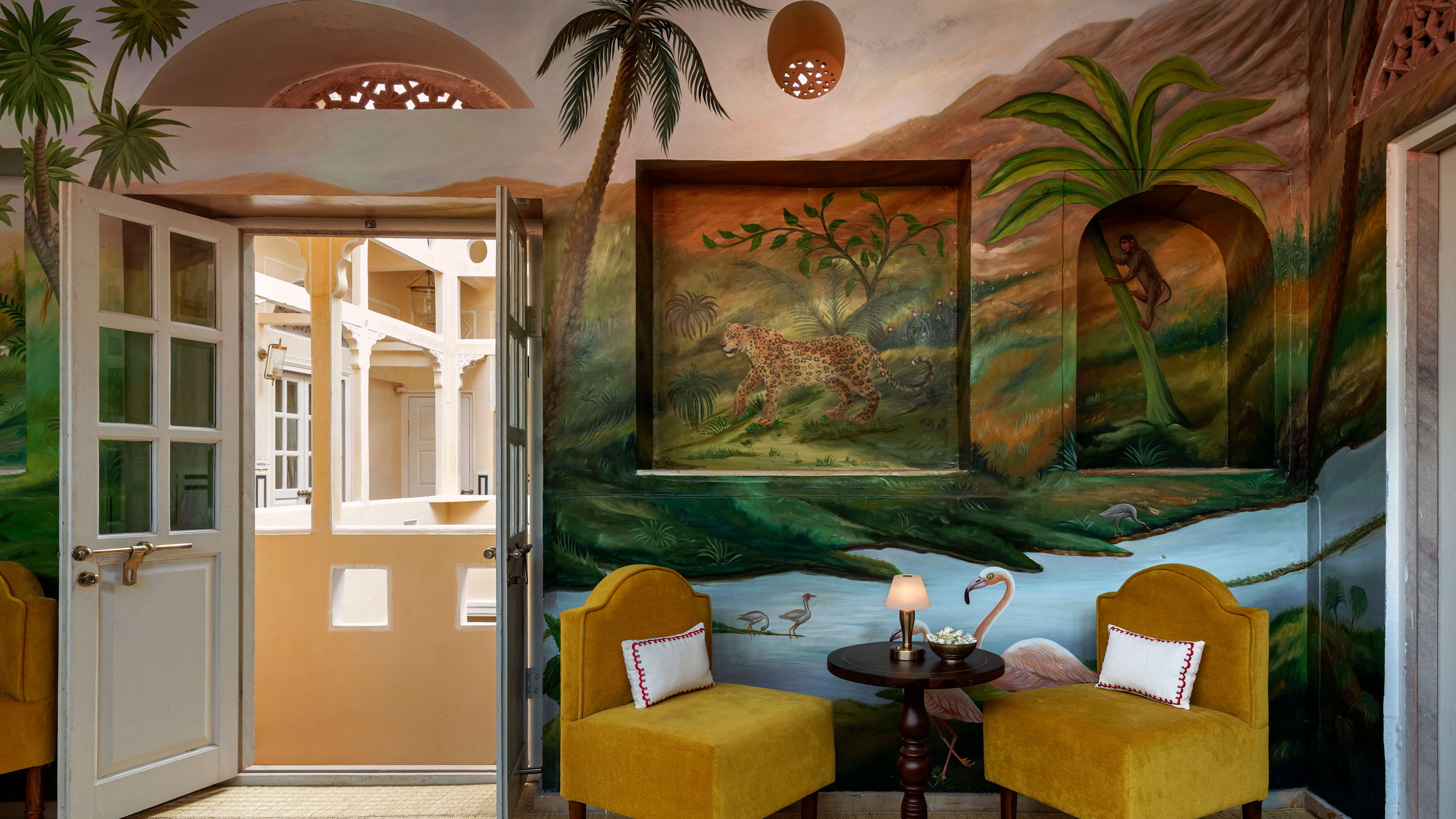
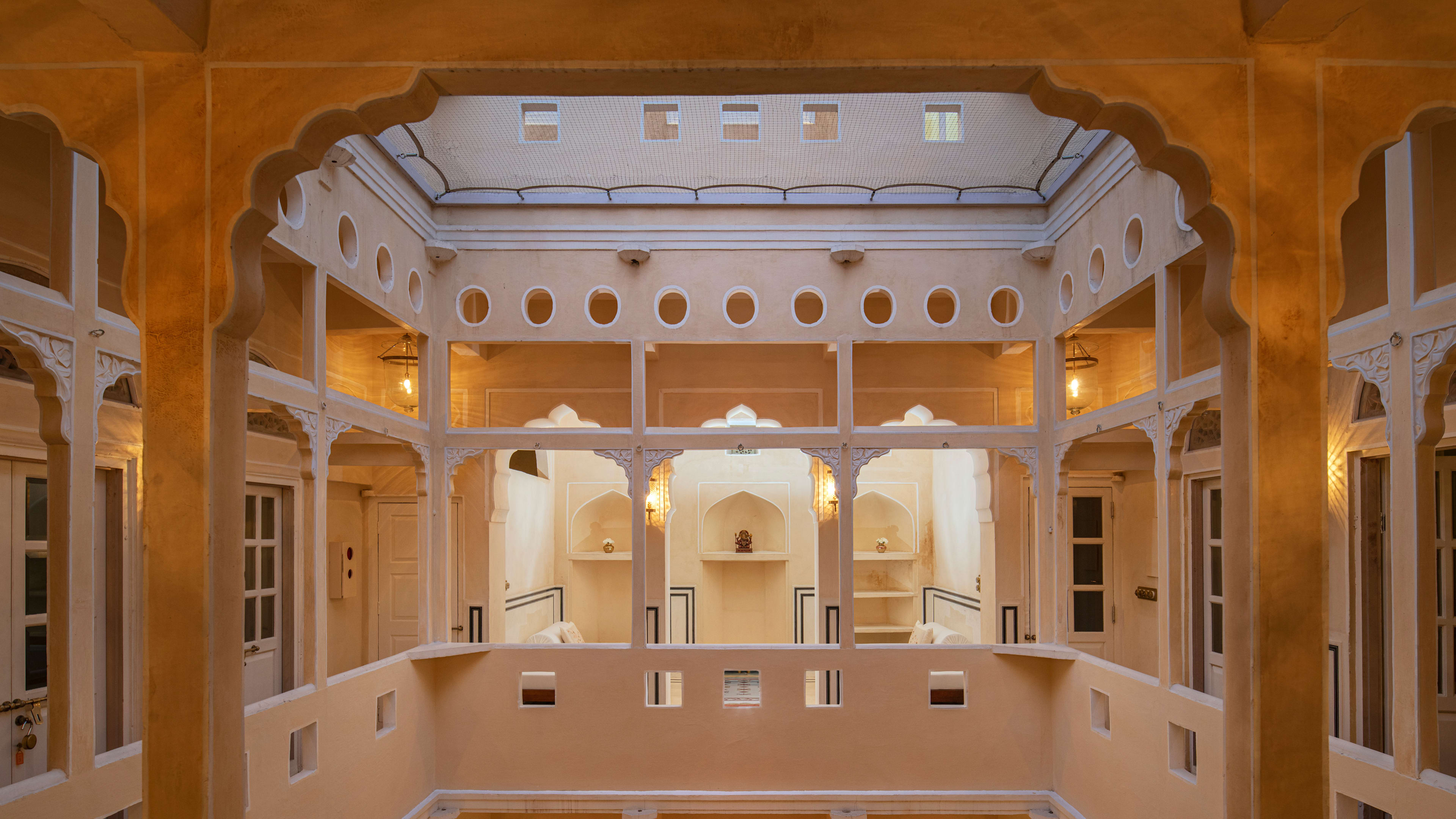
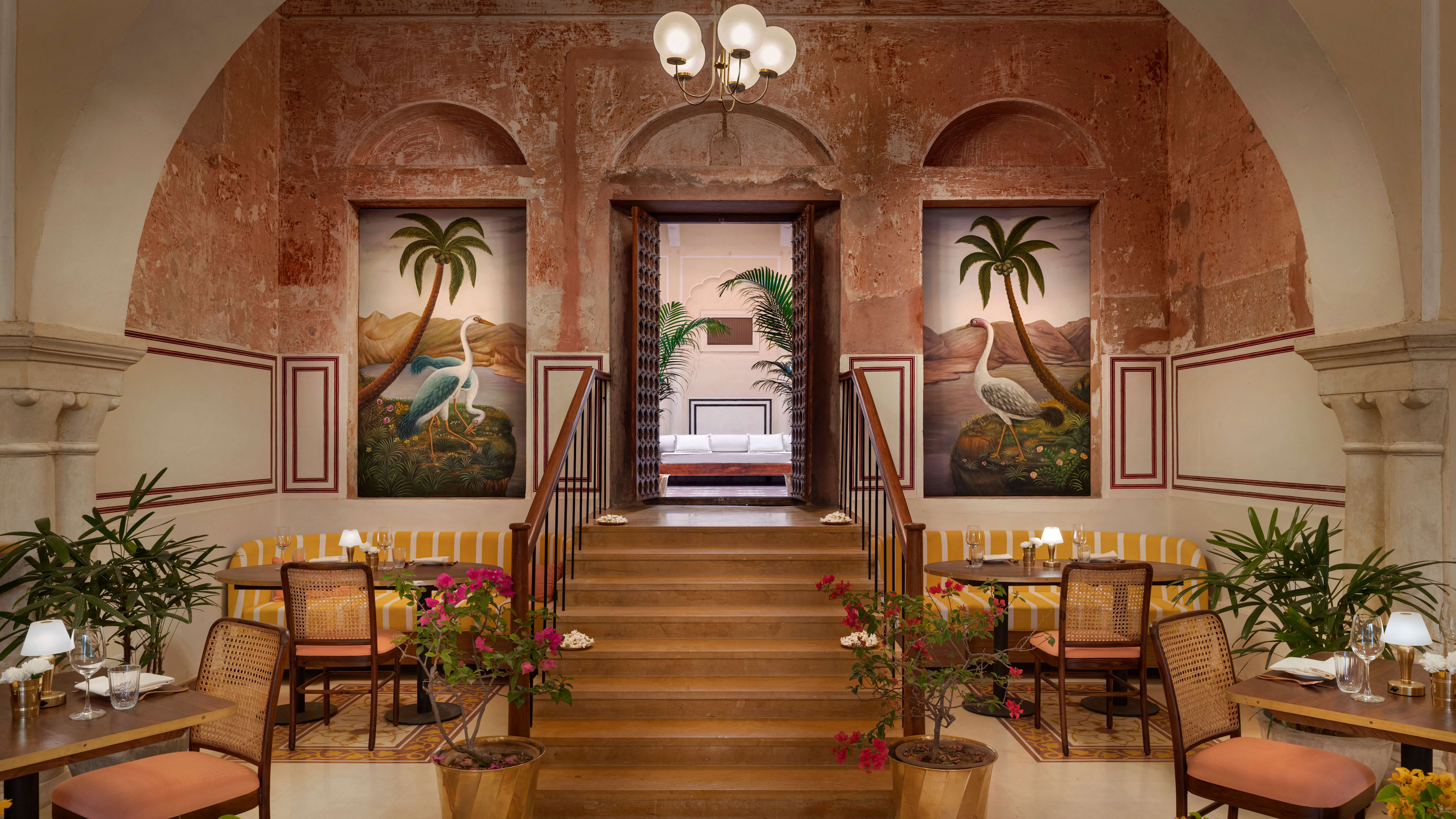
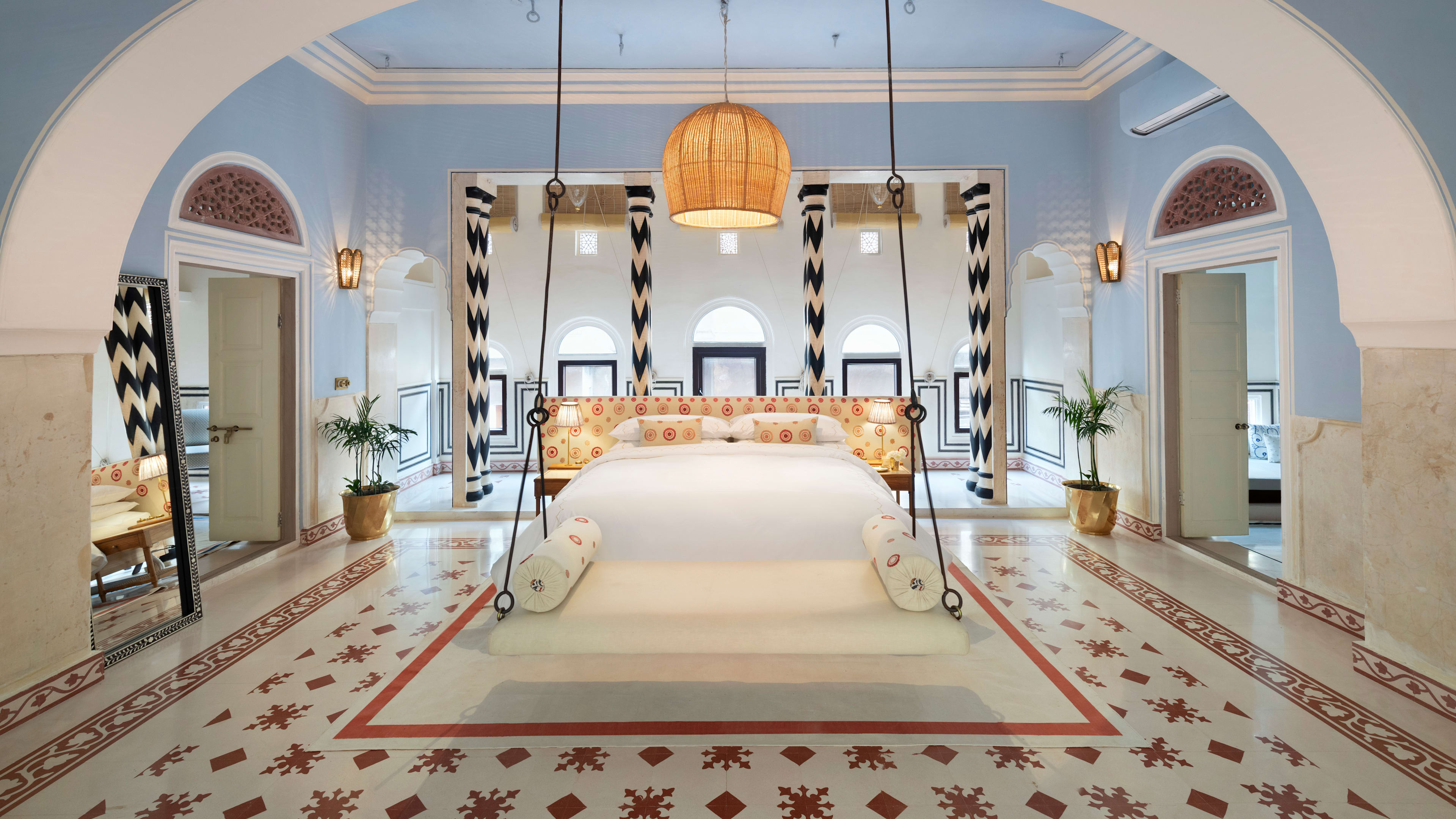
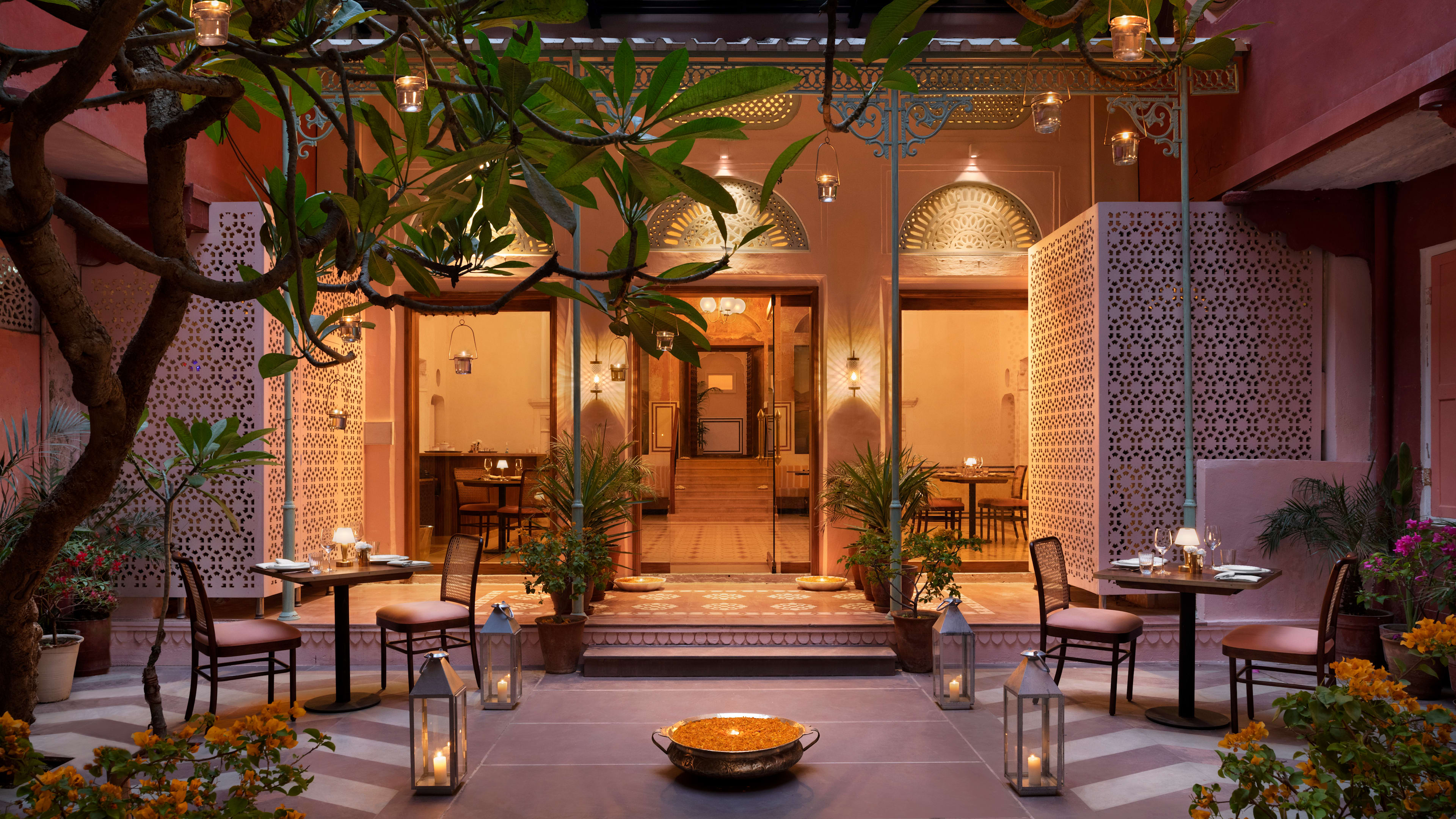
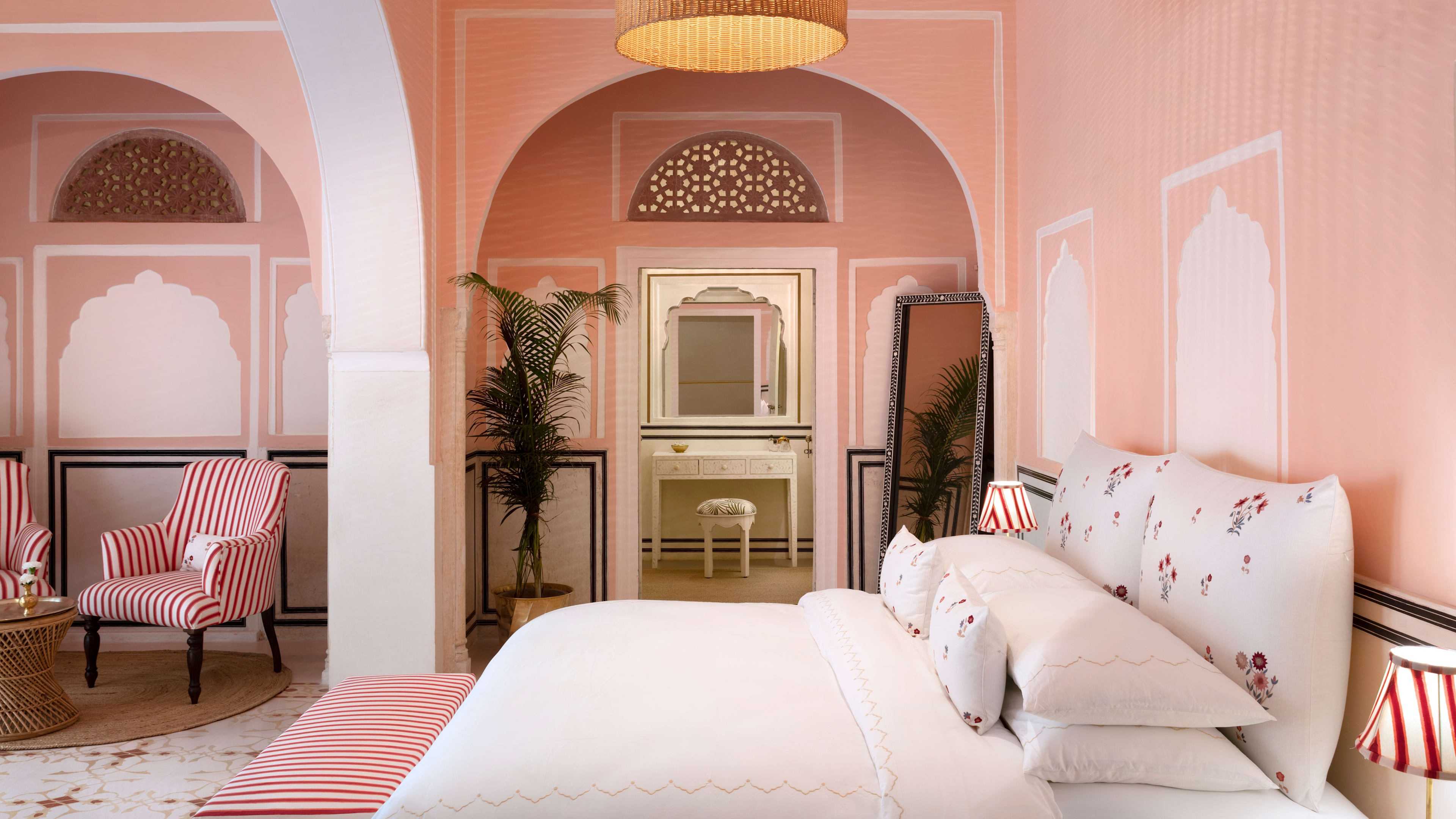
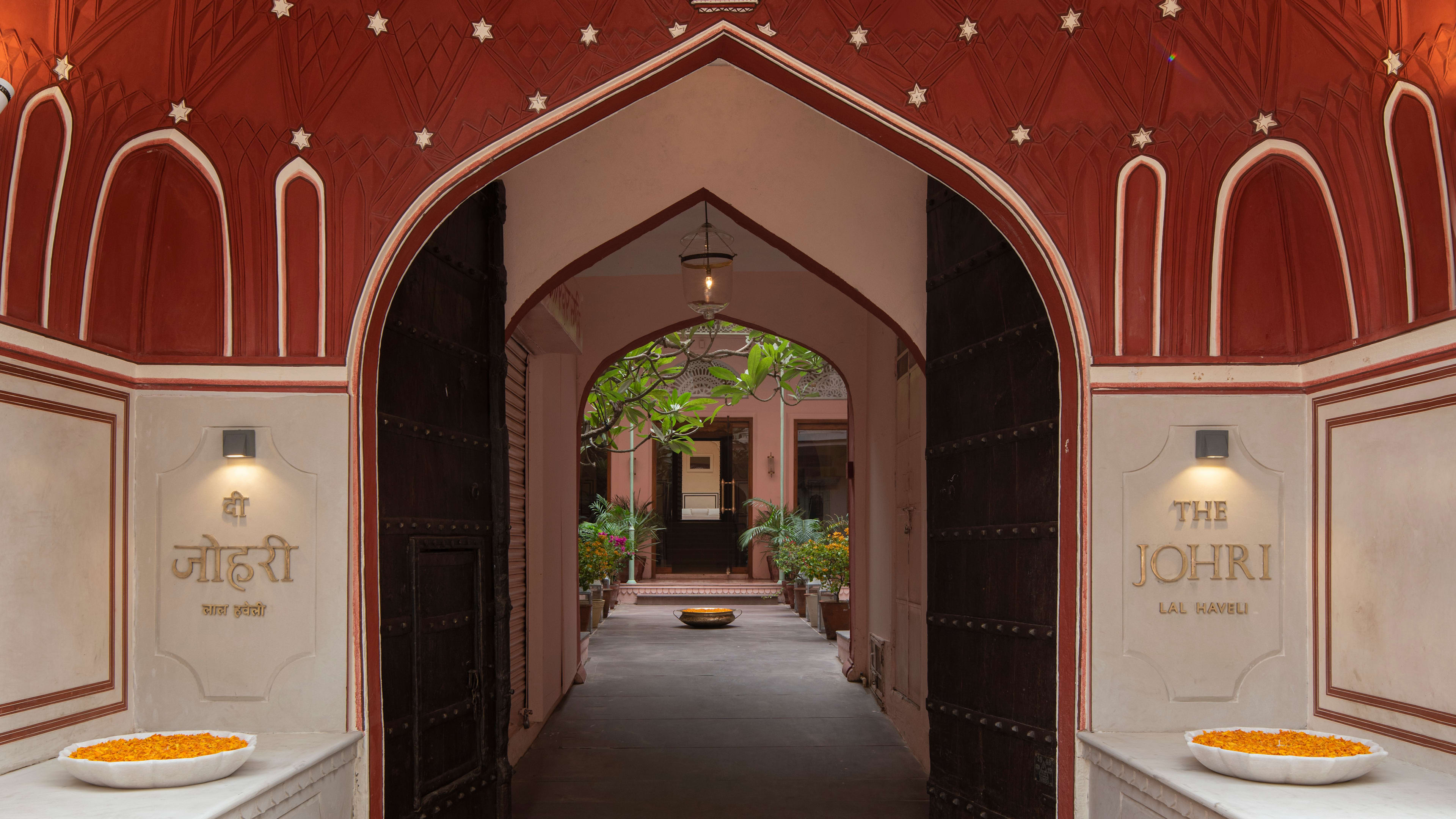
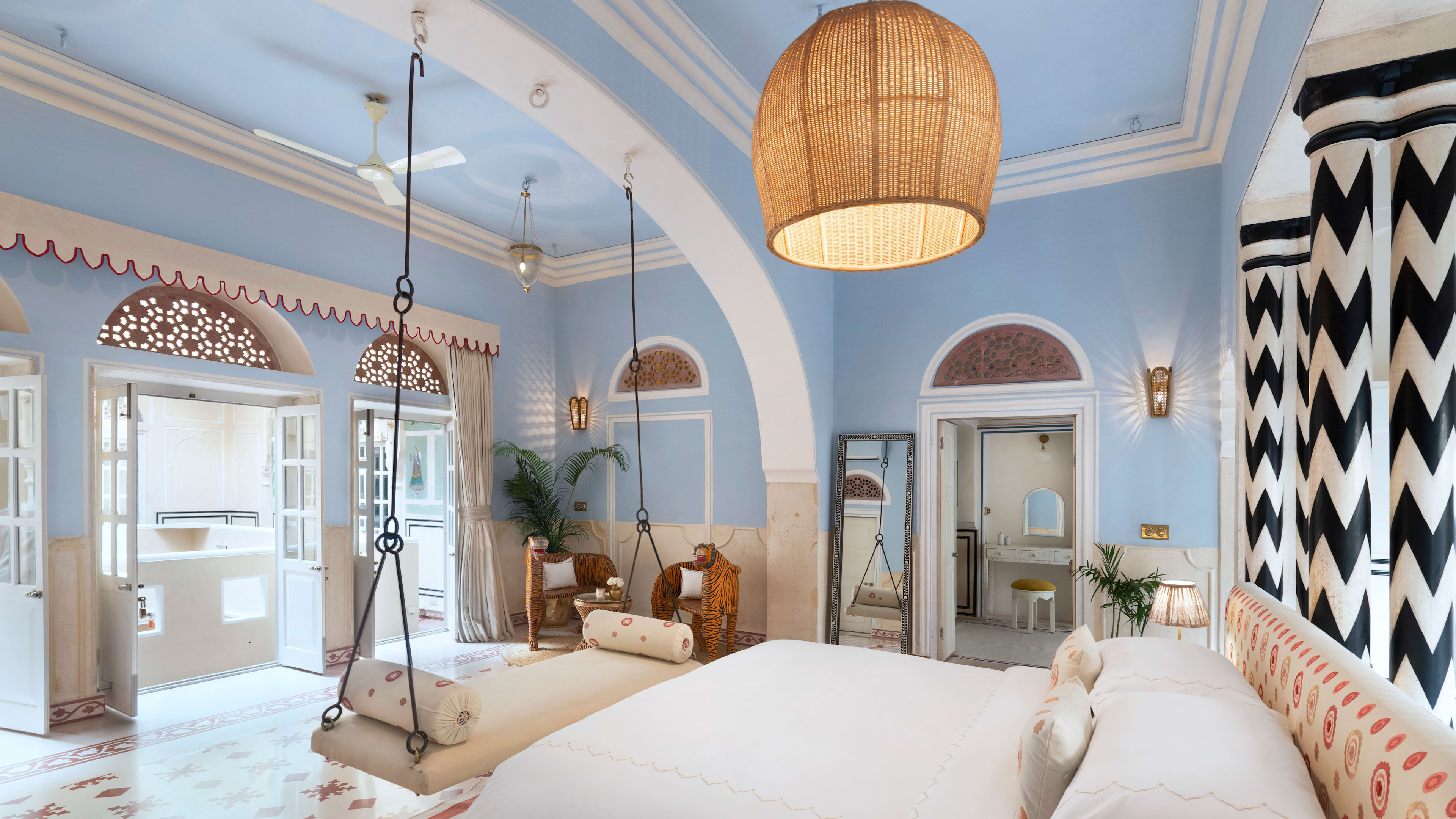
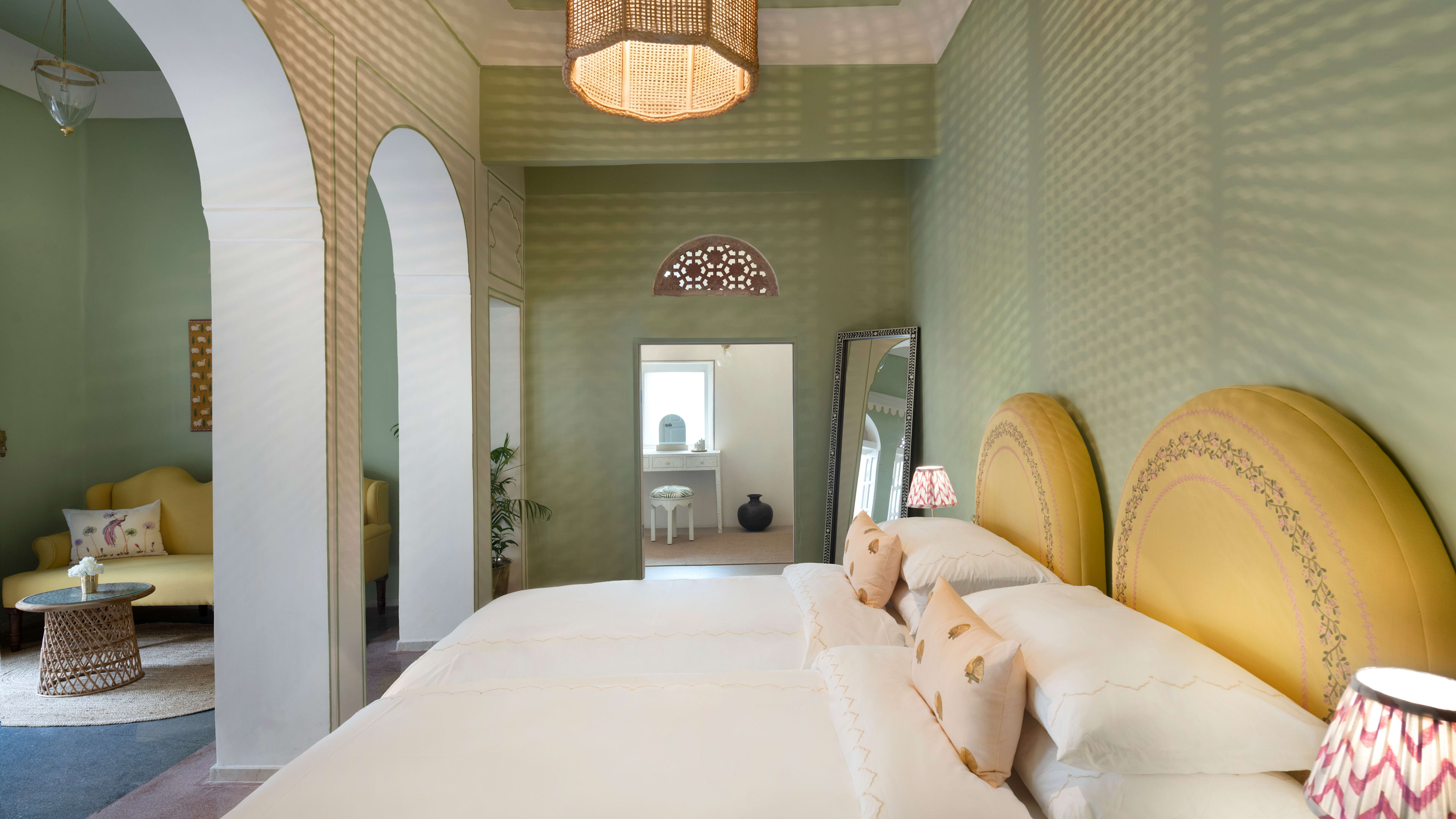
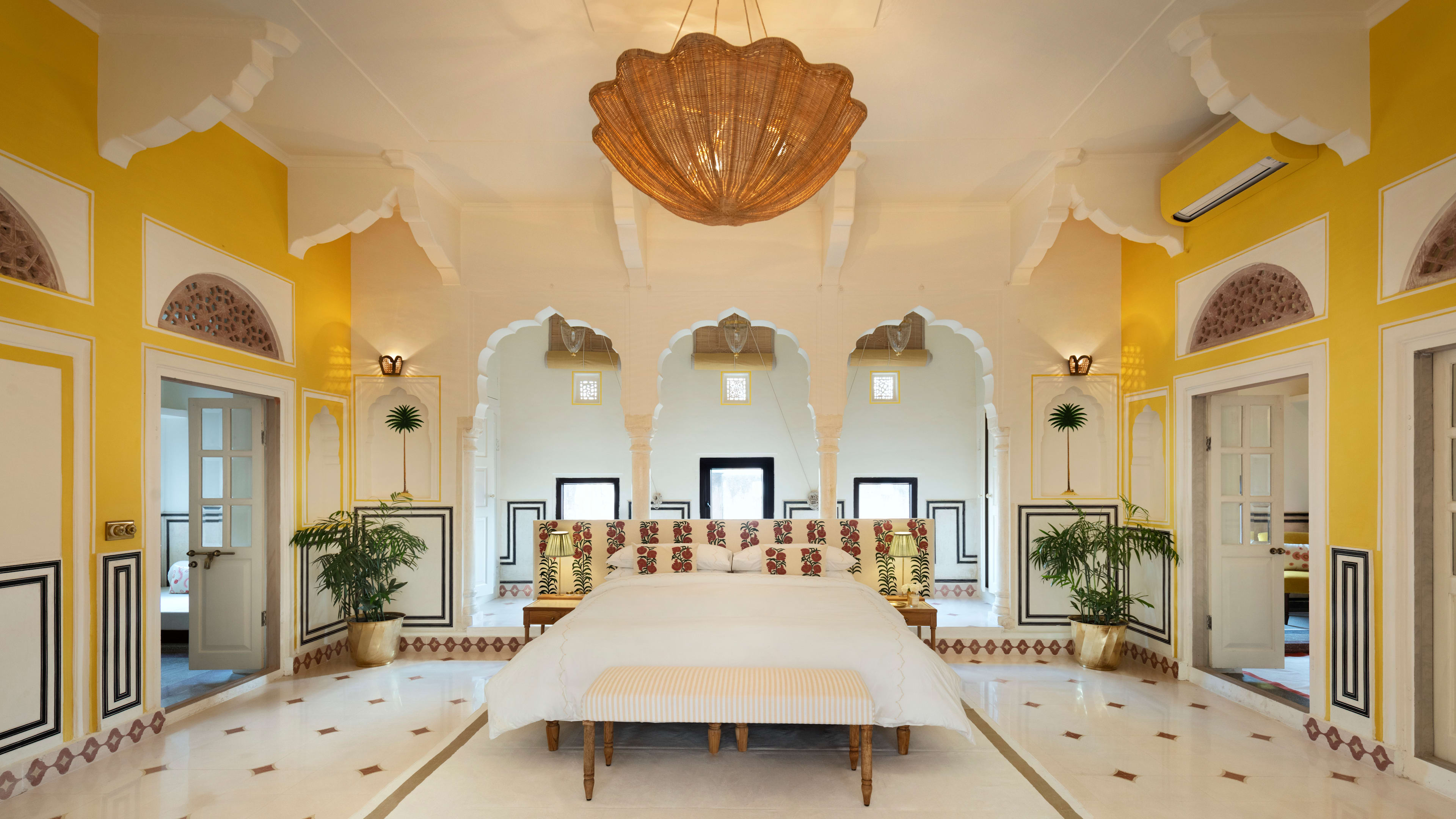
The Kasliwal family have kept Jaipur’s maharajahs bedazzled for centuries, as the long-standing custodians of glittering emporium the Gem Palace, but familial talents go beyond bijouterie with the opening of the Johri. To modernise this 19th-century mansion Siddharth Kasliwal and Abhishek Honawar – the driving force behind hip local hideaway 28 Kothi – called in Naina Shah, New York-based couture embroiderer with an eye for interiors, to set about commissioning local artisans to design custom furniture and crockery while also hunting down vintage treasures and adding candy-hued coats of paint. From its vegetarian-en-vogue restaurant to its jungly guests-only bar and roof terrace that overlooks the city, it’s a spot that doesn’t need gems to sparkle.
Planes
Jaipur International is the closest, just a 30-minute drive from the hotel; the concierge can help to arrange a pick-up. It has direct connections across India and with some nearby countries (Bangladesh, Thailand, Oman, Qatar), but visitors from anywhere else will need to connect via New Delhi (an hour’s flight) or Mumbai (a two-hour trip). Those with stamina could make the drive from New Delhi, which is around five hours – you can break up the journey with a wildlife-spotting stop at Sariska Tiger Reserve.
Trains
While it’s not always the most luxurious form of transport, India is well connected by train. Jaipur Junction station is a 15-minute drive from the hotel (transfers can be arranged), and you can ride here direct from New Delhi in around five hours.
Automobiles
The winding lane the hotel sits on is too narrow for cars to navigate it, but you can park on the main Johri Bazaar road close by. The question, really, is do you want to drive? India’s traffic is notoriously sanity-sapping – drivers play fast and loose with highway codes and roads are an obstacle course of scooters, bikes, tuk-tuks, wayward cows and occasionally more exotic beasts. Absolutely consider a private driver if you decide to road trip it. The hotel can help with hire.
Worth Getting Out of Bed For
Disorderly yet dazzling, Jaipur – Rajasthan’s pink heart – is a lot and has a lot to love. Its spectacular examples of Rajput architecture (with a few Mughal and Neoclassical flourishes) – including forts, palaces and sprawling hawelis in shades that run from blush to terracotta – impress on a grandiose scale, but it's the fine details that captivate. Say, the Hawa Mahal’s honeycomb of nearly 1,000 intricately screened windows and jharokhas, from which royal ladies could modestly watch the outside world during purdah; the zig-zag geometry of the Chand Bawri’s (stepwell) staircases; and the complex compositions of mirror, tile, latticework, carved marble and embroidery that make the City Palace a stand-out in a place rich with show-offs. It’s no surprise the royal family still resides there. Even the city’s protective fortifications flaunt its magnificence; Nahargarh Fort (which translates to delightfully dramatic ‘abode of tigers’) sits high in the Aravalli Hills, and within is the fabulously frescoed Madhavendra Bhawan, a complex of discreet rooms which housed 12 queens, supposedly designed so that the king could visit one without the others knowing. Close by is Jaigarh Fort, frilly with ramparts, and a little further north is Amber Fort, perhaps the most arresting of all. Here, each wall, door and window is a chance to show off the designers’ eye for detail. Highlights include the Diwan-e-Khas, which is inlaid with thousands of tiny mirrors, the Jas Mandir with its delicate floral patterns, and the Sukh Niwas, queenly residences laid out around a star-shaped fountain. And, you can’t enter palatial Jal Mahal, but it's likely you’ll recognise it – this former royal residence is now mostly submerged in Man Sagar Lake, and its eerie beauty, especially when lit up at dusk, is irresistible to photographers. Sail around it for an uninterrupted view.
When Jaipur was established in 1727 it was designated as a city of art and culture, and its myriad festivals uphold its reputation – the Jaipur Literary Festival is a date big-name writers all over the world have in their calendars, and close on its heels (both are held in late January) is the Jaipur International Film Festival. The start of the year is a very jubilant time, as on the 14 January, the city’s clear Brahmin blue skies are obscured by thousands of colourful kites; the Kite Festival is even more magical at night when lamps are flown up and fireworks spatter the sky rainbow. And, in August, Teej Festival celebrates Rajasthani women, who parade in their most mind-bendingly detailed mehndi, acid bright saris and twinkliest accoutrements. Much of Jaipur’s clamour comes from its bazaars, most open seven days a week, often till late. Each has a speciality – Aravali has covetable homewares, Tripolia is best for bangles, Nehru has stylish jootis, and Kripal Kumbh has pottery in all shades of blue – but one of the best is Johri on the hotel doorstep, where breathtaking handmade jewels catch magpie-eyed shoppers.