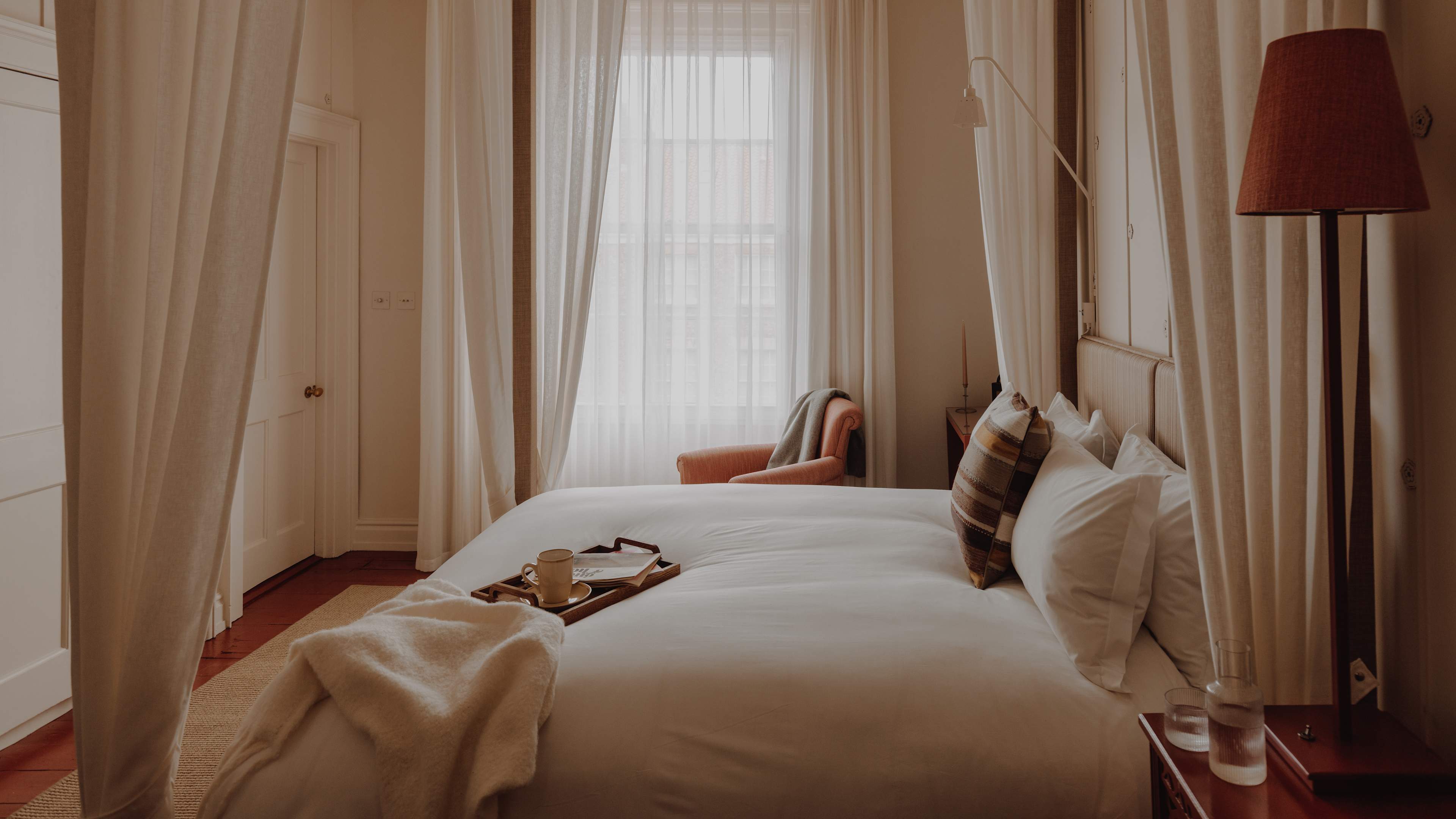
No. 1 by Guesthouse, York
Antiquity-filled Georgian abode
A meander from the Minster
No. 1 by Guesthouse, York is a 19th-century townhouse that dips a dainty toe into the past and is set to become a beloved fixture of its present. A delightful renovation by the family-owned Guest group, the hotel's sash windows, sweeping staircase and column-graced façade have been primped and preened; the vaults have become soothing spa-treatment suites; and designer Martin Hulbert has added antiques and textiles that nod to the locality – thus packing centuries into a chic, cosy shell.
Planes
If you’re arriving from a major city in Europe, you can fly direct to Leeds Bradford Airport, around an hour’s drive away from the hotel. Manchester Airport is further away (a two-hour drive), but flights landing here connect directly from the US, Asia and Africa.
Trains
York station is a 10-minute drive or a 15-minute walk from the hotel. If you choose to walk – and it’s a lovely one, over the River Ouse and past the York Museum Gardens – the hotel will send someone out on a bike to grab your bags (and give you a brolly if it’s raining), so you can stroll unimpeded. The London to Edinburgh line (which runs from King’s Cross) stops at York, so the city’s easy to reach from either direction.
Automobiles
You won’t need a car in York – it’s easily walkable and the made-for-mediaeval-traffic centre is largely pedestrianised (just try squeezing a car through the Shambles). There’s a car park at the side of the hotel with 19 spaces and 24-hour access for £30 a night; or public car park Marygate is a five-minute walk away.
Worth Getting Out of Bed For
You’d need a long spade to dig into York’s history, which is a whirl through prehistoric tribes, Roman and Viking invasions, Norman rebellions, the turmoil of the Wars of the Roses, assorted besiegements and finally finding a foothold as a noble cultural powerhouse during the Georgian period. It’s been a rocky road to the present, but what’s left is a city where layers of history can be seen in a 10-minute walk. The remnants of Roman Walls and columns are the most visible legacy of Empire, but there are also sarcophagi, stretches of road, sewers and bathhouses unearthed under various establishments – some of which are open to the public. There are fewer prominent Viking ruins, but you can learn about their lives in the city at the fascinating Jorvik Viking Centre, which has a ride through their reign and an archaeological centre.
Clifford’s Tower, the keep of the former York Castle, sits atop a hill and has a dark history as the site of a Jewish massacre and a prison, but it’s worth seeing as part of a tour (the city’s famous ghost tours tell tales of blood running down the walls, but it’s safe to say these are somewhat exaggerated). The Treasurer’s House has Roman ruins in the basement and genteel Victorian interiors upstairs (it, too, is allegedly haunted by centurion ghosts). And the spectacular York Minster is a time capsule on a very grand scale; it’s stained-glass rose window is maybe its most recognisable feature, but there’s much to explore: climb the central tower for panoramic city views, gaze up at the intricate nave and chancel ceiling, explore the details of its many colourful windows in depth and head down to the undercroft and crypt.
The quaintest remnant of mediaeval York is the Shambles, a very narrow yet picturesque street left pretty much as it was, now lined with tea salons, sweet shops and places where you can buy souvenirs (and to round off your tour of strangely named throughways, seek out Whip-Ma-Whop-Ma-Gate – the city’s shortest street – close by). You can also explore the restored wattle-and-daub Barley Hall and the Merchant Adventurers’ Hall. History buffs will be in heaven, but if you want a (relatively) more modern distraction, you can visit the Wonka-esque Chocolate Story or Penny Arcadia with its old-school games, see a restored Cold War Bunker, wander the Art Gallery or see exotic species at the Yorkshire Wildlife Park. And, York's indie shops make it a magnet for shoppers too – try Heima (named after a documentary about Icelandic band Sigur Rós) for eco-chic homewares, Devil's Elbow Antiques for vintage curios and Botanic for exotic houseplants.


